Executive Summary
Digital transformation has reached Brazil’s pharmaceutical sector – though under different conditions at global headquarters and within local affiliates. While global centers focus on platform strategies and AI infrastructure, local teams are looking for fast, practical, revenue-relevant solutions. This is where clear implementation needs emerge: from patient identification and engagement to AI in clinical trials, GenAI visibility, and capability building.
Brazil’s Pharma Sector Is Ready – What’s Missing Is Consistent Execution
The digital transformation of healthcare is a global reality, and the pharmaceutical industry is playing an increasingly active role in this shift. In Brazil, pharma’s adoption of digital health technologies remains at an early stage, though promising signs of maturity and momentum are emerging.
A recent survey conducted by the Research Centre of SINDUSFARMA, curated by Dr. Jefferson Fernandes (SPECIS, Brazil) and Dr. Andreas Keck (Syte Institute, Germany), analyzed the current state of digital health adoption in 58 national and international pharmaceutical companies operating in Brazil*.
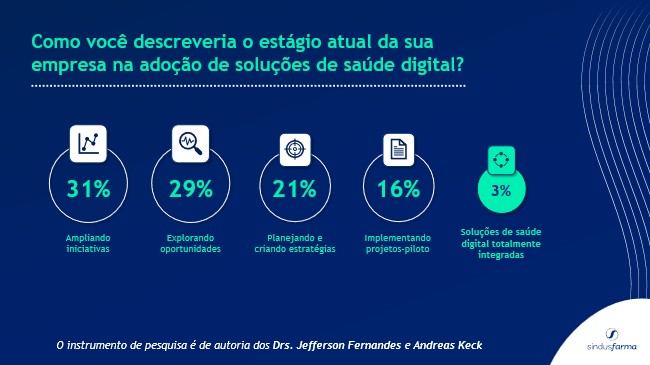
Among other findings, the study revealed that only 3% of companies currently operate fully integrated digital health solutions. Meanwhile, 31% are expanding existing initiatives, 29% are exploring new opportunities, 21% are in the planning and strategy phase, and 16% are piloting digital health projects. These numbers reflect an industry in transition – most players are still in early stages of execution (Figure 1).
Digital Health Is a Strategic Priority – But Operational Levers Are Often Underused
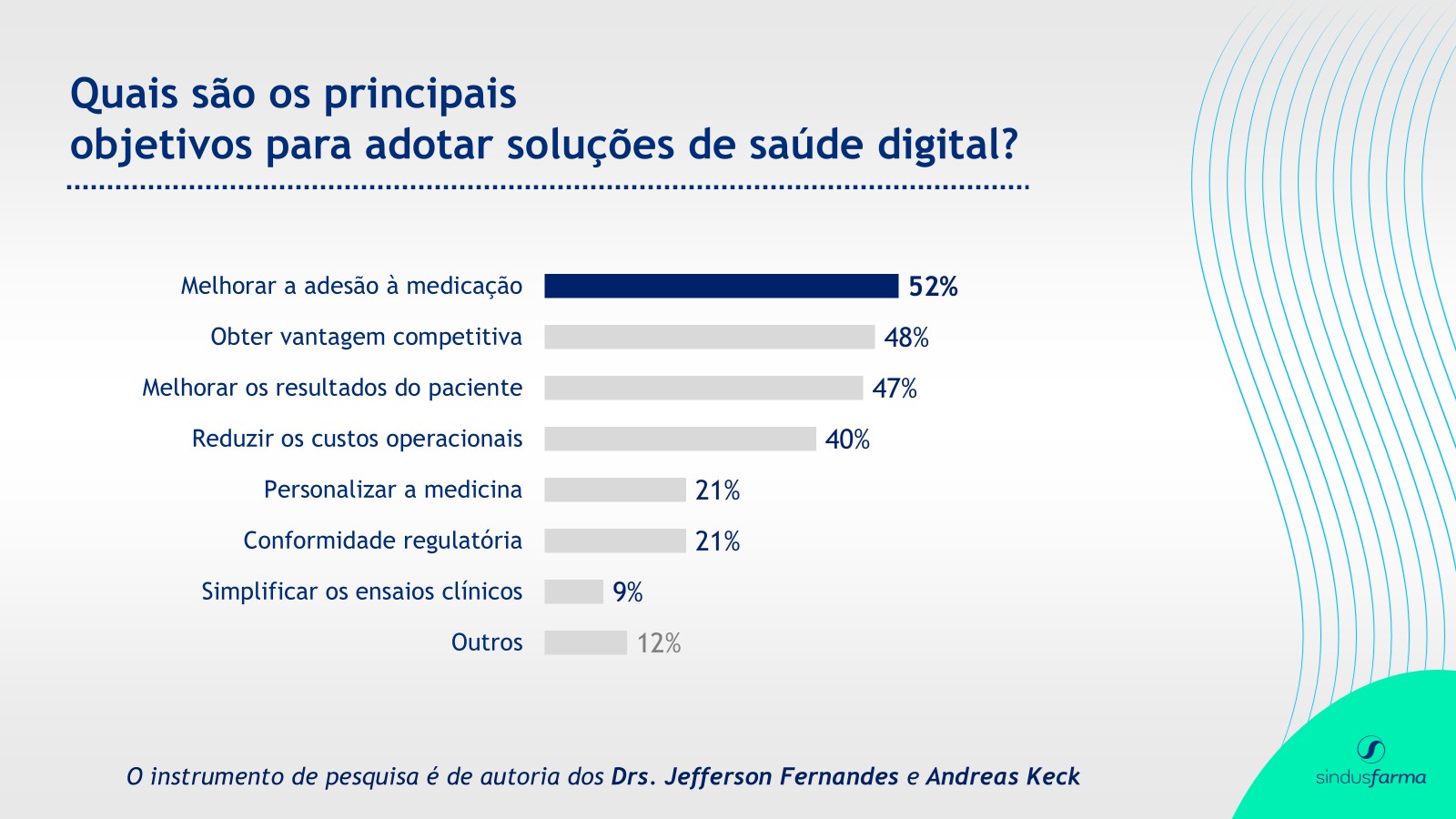
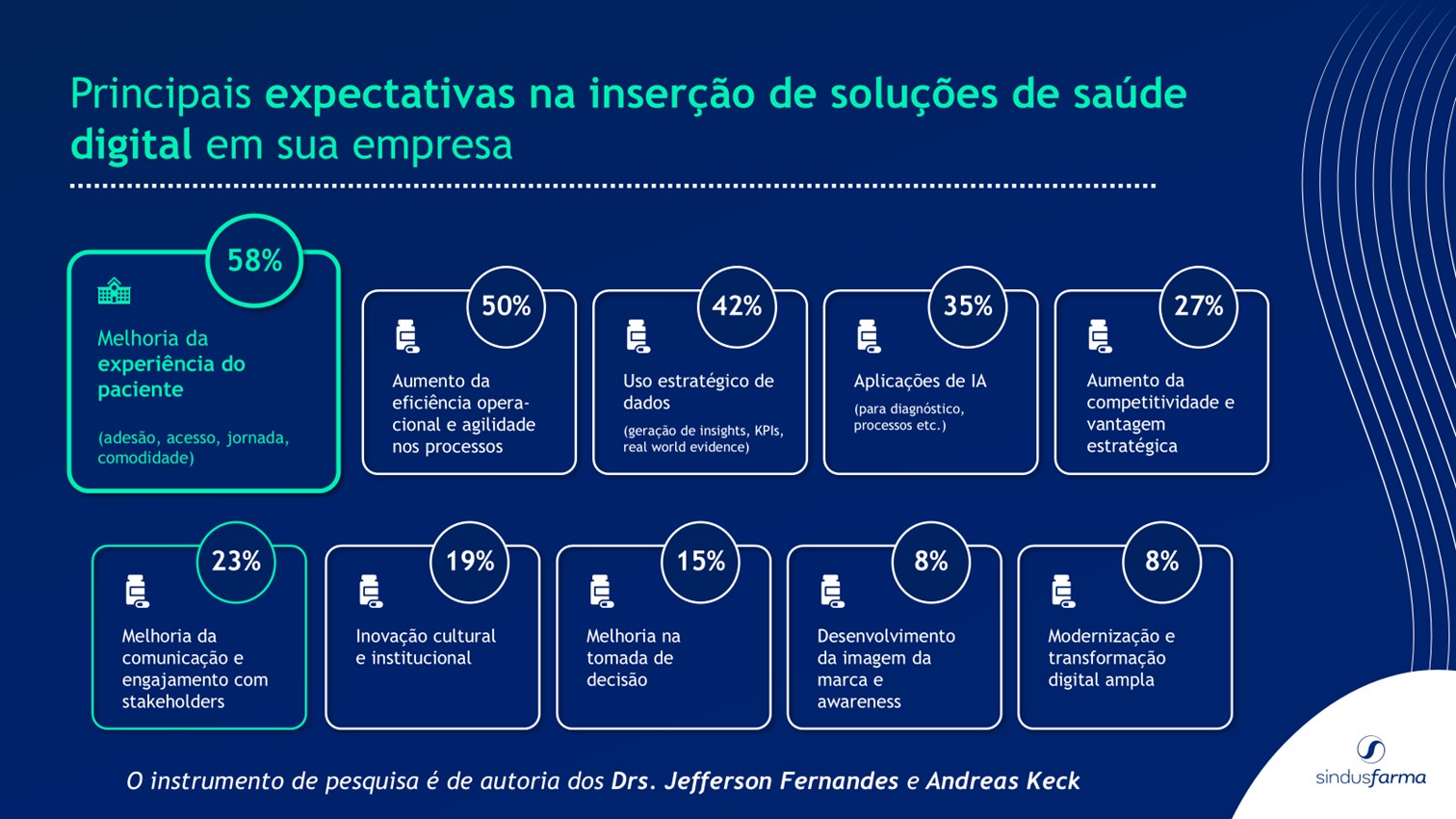
The main goals of current initiatives include improving patient experience (58%), increasing operational efficiency (50%), and using data strategically to generate insights and real-world evidence (42%). Artificial intelligence is also gaining traction, with 35% of companies highlighting AI for diagnostics and process automation (Figure 2).
The pharmaceutical industry's main expectations regarding the implementation of digital health solutions are shown in Figure 3.
Global Benchmarks Show What’s Possible
These trends reflect a partial alignment with the international industry, where the use of digital technologies is already more consolidated and structured. Major global pharmaceutical companies have been investing heavily in large-scale data platforms, AI-powered prediction models, remote patient monitoring, and integration with digital health ecosystems.
Globally, the impact of digital technologies in pharma is accelerating across the entire value chain. According to Mordor Research, 95% of pharmaceutical companies are already investing in AI, with investment expected to grow from USD 4 billion in 2025 to USD 25 billion by 2030. The field of AI-powered drug discovery is particularly dynamic: 8 of the 10 largest M&A deals have taken place since 2023.
The potential goes far beyond R&D. From early patient identification and personalized treatment pathways to intelligent monitoring and digital therapeutic support, new ways to improve outcomes and cost-effectiveness are rapidly emerging. All ten of the world’s top pharmaceutical companies have established strategic AI partnerships since 2023. AI-generated molecules can reach preclinical milestones up to 40% faster than traditional methods.
Generative AI is also gaining importance as a tool for internal productivity, particularly in medical content creation, commercial operations, and strategic data use. Companies that optimize their content for GenAI search tools are seeing significantly improved visibility in clinical and patient-facing queries. Traditional search engines are losing relevance as users increasingly rely on GenAI environments for medical information.
A study conducted by Deloitte (2022) shows that 77% of global pharmaceutical companies consider digital health an essential strategic pillar, with investments directed towards solutions such as decentralized clinical trials, wearables for continuous monitoring, and partnerships with health tech companies to accelerate patient-oriented innovation. McKinsey (2021) also reinforces that leading companies are moving away from isolated projects and adopting integrated digital transformation approaches across the entire value chain.
A Perspective for Pharmaceutical Companies in Brazil
In Brazil, barriers still persist - fragmented healthcare systems, limited interoperability, regulatory challenges in the use of sensitive data, especially for analytical and predictive purposes, and limitations in internal innovation structures.
However, the growing maturity of the healthcare startup ecosystem and regulatory advances by ANVISA and the Ministry of Health open up new perspectives for the development of this agenda.
Comparing the two contexts, it is clear that, while globally, digital health is seen as a lever for organizational transformation, in Brazil it is still strongly anchored in tactical objectives, such as efficiency gains or improved communication with stakeholders. To advance, local pharmaceutical companies will need to broaden their strategic vision and invest in building internal capacity, collaborative models with the public and private sectors, and robust impact assessment criteria.
The adoption of digital health in Brazil is underway—and, although the starting point is different from the international scenario, the potential for convergence is significant. The challenge now is to accelerate the transformation journey, fostering an environment that fosters innovation with a real impact on patients, physicians, and the industry itself.
From Global Strategy to Local Execution
International experience from Syte Institute’s and SPECIS in global and regional implementation projects shows that digital health and AI only become commercially relevant when strategic positioning, technical execution, and operational integration go hand in hand. The challenge lies in translating global benchmarks into locally executable models. While global headquarters often focus on data platforms and proprietary infrastructure, local organizations need fast, affordable, and high-impact solutions.